This year marks five years since the launch of our sustainability strategy Primark Cares, which focused on the areas of Product, Planet and People. We have been reviewing our approach to sustainability over the past 12 months.
Our updated strategy will centre around our strengths as a business: our products, our scale and our reach across the supply chain. In the context of tighter regulation, changing technology and consumer expectations, the aim of our renewed strategy is to support long-term responsible growth. We will publish our updated strategy next year.
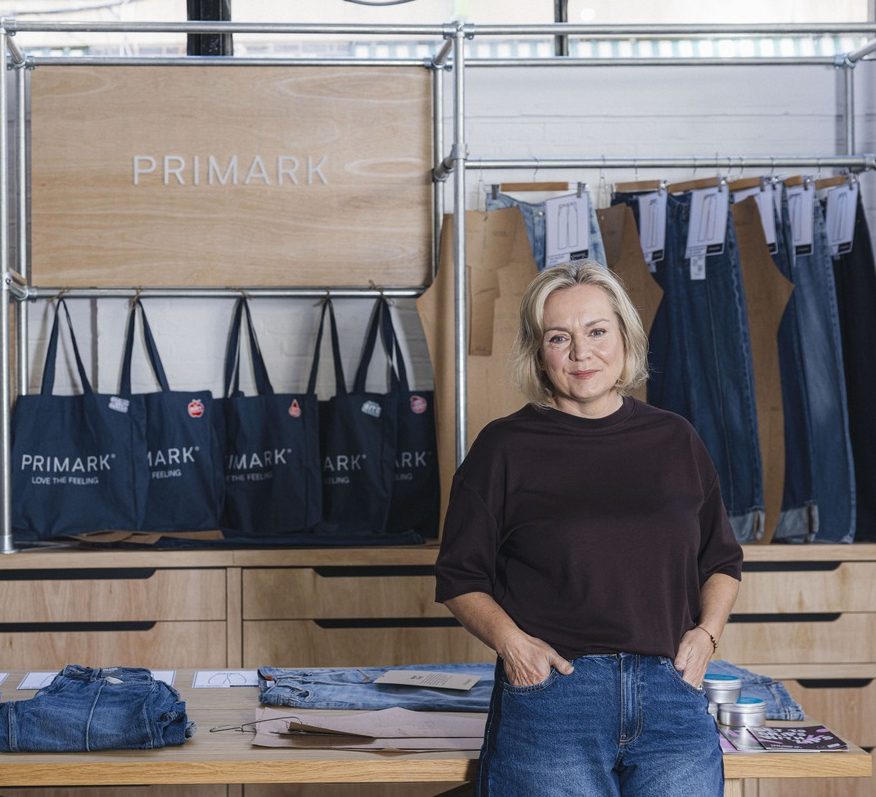
A sustainability strategy is about long-term change. It requires businesses to think and act differently, often while navigating complex commercial realities and an evolving external landscape. Progress is rarely straightforward, and no single organisation or team can deliver it alone.
That is why collaboration remains central to our approach at Primark. Since launching Primark Cares in 2021, we have worked to embed sustainability across our business, bringing together colleagues from across Primark and working closely with our suppliers and wider industry partners. We have invested in the relationships, skills and capabilities needed to turn our ambitions into practical action.
We know these are long-term programmes and that meaningful change takes time. But it is equally important to recognise the progress made along the way. Every milestone reached, capability strengthened and lesson learned matters.
As we reflect on the past year, we are proud of the progress we have made and grateful to the colleagues, suppliers and partners who have contributed to it. We have learned along the way too, adapting our approach where needed and being honest about the challenges that remain.
This year has also been an important opportunity to step back and consider where we go next. We have been looking carefully at the progress we have made, what we have learned and where we believe we can make the greatest difference in the years ahead. That work is helping to shape the next phase of our sustainability strategy, building on the foundations we have established while evolving our approach for the future.
We enter this next phase with a clearer understanding of where we can have the most impact, and with strong foundations to build from. There is much more to do, but we should also take confidence from what we have achieved so far. By recognising that progress while continuing to challenge ourselves on what comes next, we can keep moving forward together.
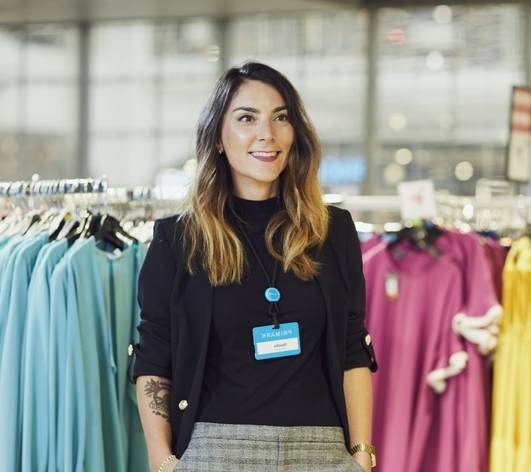
Lynne Walker
Director of Primark Cares
Our Primark Cares commitments 2021-2026
-
Giving clothes a longer life
We will become a circular and more sustainable business
-
Protecting life on the planet
We will nurture nature, halve carbon emissions and eliminate waste
-
Improving people's lives
We will protect and improve the livelihoods and resilience of the people who make our clothes
Impact and delivery 2025/26

1 Recycled polyester, recycled polyamide/nylon, recycled acrylic, recycled cotton, cotton from the Primark Cotton Project, Cotton made in Africa® (CmiA), organic cotton, viscose, modal and lyocell. See Primark preferred sources.
2 Cotton from the Primark Cotton Project, recycled cotton, organic cotton and Cotton made in Africa® (CmiA). See Primark preferred sources.
3 As per Primark Circular Product Standard 1.0.
4 This metric includes products containing cotton from the Primark Cotton Project, recycled cotton and Cottonmade in Africa® (CmiA). See Primark preferred sources.
Δ
Metrics independently assured by Ernst & Young (EY) against the International Federation of Accountants’ International Standard on Assurance Engagements Other than Audits or Reviews of Historical Financial Information – known as ISAE 3000 (Revised). These are highlighted in this report with the symbol Δ. Read more here.